Best AI Search Engines in 2026 (and How They Differ)
The best AI search engines in 2026 compared: Perplexity, ChatGPT search, Google's AI surfaces, Copilot, Grok, and DeepSeek, plus which are actually free.
 ChatGPT
 Claude
 Perplexity
 Grok
GrokOn this page
The best AI search engine depends on which of three things you actually want: cited sources you can check, live information, or a general assistant that can search when it needs to. Every major engine now does all three to some degree, and they differ enough in emphasis that "best" has a real answer per use, just not one answer overall. This guide compares the field on the two questions that separate them in practice, with an honest note on what each one costs.
What makes an AI search engine different from a chatbot
An AI search engine retrieves current web pages before it answers and, at its best, shows you which ones. A chatbot answers from what training encoded, which is why people searching for a "ChatGPT alternative" are often looking for a different thing than people searching for AI search: the first group wants a general assistant for writing and thinking, the second wants answers grounded in the live web with receipts. This page covers the second group. The line has blurred, since every major assistant now searches when it decides the question needs it, but the engines below differ sharply in how often they ground, how visibly they cite, and how much of that you get without paying.
On the free question: every engine in this guide has a genuinely usable free tier. The differences show up in daily limits, which model answers you, and whether search-grounding is always on.
The landscape at a glance
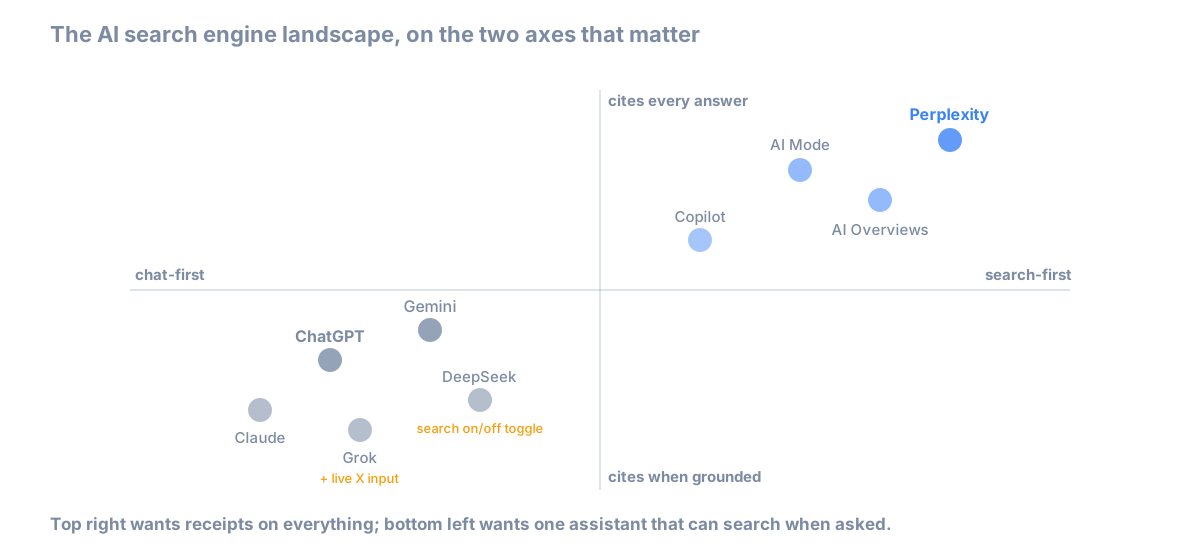
Perplexity
Perplexity is the purest expression of the category: every answer is built from retrieved pages and carries visible source cards, so checking a claim takes one click. The free tier is generous for everyday use, and Pro adds heavier models and more searches. It is the default recommendation for research-style queries where you want receipts, and its aggressive citing is also why it is the most transparent engine for brands to audit. Weaknesses: answers can lean hard on whatever the retrieval pulled, so a thin source set produces a confident-sounding thin answer.
ChatGPT search
ChatGPT folds search into the general assistant: it decides per question whether to hit the web, and shows sources when it does. The strength is the blend, one tool for writing, reasoning, and current information, and the free tier includes search. The cost of the blend is inconsistency in when it grounds and how it picks its sources, which matters if you need every answer sourced. For the brand-side view of the same surface, see ChatGPT rank tracking.
Google AI Overviews and AI Mode
Google's AI answers live inside Google Search itself, on two surfaces. AI Overviews is the generated summary above some results, free by definition and reaching more people than any product on this page. AI Mode is the conversational tab that fans a question into many background queries for a longer synthesized answer. Neither is a separate app to adopt; they arrive inside the search behavior people already have, which is exactly why they matter. The limitation is control: you cannot make Google generate an Overview for a query it considers unsuited to one.
Gemini
Gemini is Google's standalone assistant, grounding in Google's index when a question needs the web and showing the pages it used. It is the strongest choice if your work lives in Google's ecosystem, with the deep Workspace hooks that implies, and its free tier is substantial. It sits closer to the chat-first side than AI Overviews: general assistance that can search, rather than search wearing an assistant's face.
Microsoft Copilot
Copilot rides the Bing index and cites its sources, free with generous limits, and woven into Windows and Microsoft 365 for organizations that live there. As a pure search product it is rarely anyone's first pick outside the Microsoft world, but it earns a specific mention for one reason covered in Copilot rank tracking: Microsoft is the only vendor that reports site owners their citation data, which says something about how seriously it treats the search side of the product.
Grok
Grok, from xAI, differentiates on one input no one else has: the live X conversation. For questions where the answer is genuinely unfolding in public discussion, breaking events, sentiment, what people are saying right now, it reaches material other engines see late or never. For stable research questions it is a less obvious pick, and its X-driven volatility means the same question can get noticeably different answers days apart. Full access requires an X subscription tier.
DeepSeek
DeepSeek pairs a capable free assistant with an optional web-search mode and has built a large international audience, particularly outside the English-speaking web. It is the engine to check if your questions or your audience are multilingual. Its search-off answers come from the model alone, so for current information make sure the search toggle is on, a distinction that matters enough that brand tracking on DeepSeek logs it per run.
Claude and the smaller field
Anthropic's Claude searches the web when a question calls for it and cites what it uses, with its center of gravity in long-form reasoning and writing rather than search volume. Beyond the majors, a tail of products, from privacy-focused paid search to niche research tools, serves specific audiences well without changing the overall picture: for most people, the engines above are the field.
Which one should you actually use
By need, not by brand: for cited research, Perplexity first. For one assistant that does everything acceptably including search, ChatGPT or Gemini, decided mostly by which ecosystem you live in. For zero-effort adoption, Google's own surfaces, since they come to you. For live public conversation, Grok. For multilingual or non-English-first use, DeepSeek deserves a real trial. Most people end up with one daily assistant plus Perplexity for the questions where sources matter, a combination that costs nothing.
If you market to people who use these
Flip the page around: your buyers are on these engines asking about your category, and each engine answers with a different set of brands, sourced from different pages. Which ones name you, in what position and framing, is now a measurable channel, and the method is the same brand mention tracking protocol across all of them. That measurement is the job Citlyze does on a schedule, across the engines this page just compared.