Best AEO Tools in 2026: Answer Engine Optimization Software Compared
The best AEO tools for tracking and improving how answer engines cite your brand. Compared on answer tracking, audit depth, engine coverage, and price.
 ChatGPT
 Claude
 Perplexity
 Grok
GrokOn this page
- What separates AEO tools from SEO tools
- Comparison table
- Citlyze: tracking plus the input side
- Otterly.AI: the budget benchmark
- Rankscale: coverage per dollar
- Knowatoa: the setup checker
- Peec AI and Promptwatch: the mid-range
- Profound, Scrunch, AthenaHQ: the enterprise tier
- What about free graders?
- How to evaluate one in two weeks
- Which tier do you actually need?
An AEO tool earns its keep by answering two questions: which answer engines mention your brand today, and what do you change to get mentioned tomorrow. Tracking without optimization guidance is a scoreboard; optimization guidance without tracking is guesswork. The tools below get graded on both halves.
Quick picks: Citlyze if you want tracking, audits, and crawler analytics in one workspace from $29/month. Otterly.AI or Rankscale if entry price decides. AthenaHQ or Scrunch AI if you are buying for an enterprise team. We build Citlyze; every claim below is checkable, and each competitor's site is linked.
If you are earlier than the buying stage, start with what AEO is for the discipline and how to do AEO for the work itself. Software is step seven of that playbook, not step one.
What separates AEO tools from SEO tools
Classic SEO tools rank you on a results page. Answer engines skip the page: ChatGPT, Perplexity, Gemini, and Google's AI surfaces compose one answer and either include you in it or hand your buyer to a competitor. That changes what software has to measure. If the difference is new to you, our explainer on AEO vs GEO vs SEO draws the lines, and the short version is: positions become mention rates, keywords become buyer prompts, and snippets become citations.
So an AEO tool needs four capabilities:
- Answer tracking across engines, with repeated runs per prompt so rates mean something.
- Citation analysis showing which domains feed each answer, yours and your competitors'.
- Optimization support: page audits, structure checks, schema validation, crawler access checks.
- Trend reporting so you can tie content changes to visibility changes over weeks, not vibes.
Point three is the one you can test for free before spending anything: our AEO grader runs the structural half of that list against a single URL, which is enough to tell you whether your problem is page structure or something a tool cannot fix.
If you already pay for an SEO suite, note that it does not cover this list. Suites report rankings, and some now bolt on AI mention counts, but repeated-run answer sampling and citation analysis are different plumbing. The overlap runs the other way: the fixes AEO audits recommend, cleaner structure, extractable answers, resolvable entities, are largely things Google rewards too, so the two programs tend to reinforce each other rather than compete for the same budget.
Comparison table
| Tool | From | Tracking | Audits | Crawler analytics | API |
|---|---|---|---|---|---|
| Citlyze | $29/mo | Repeated-run, 8+ surfaces | GEO audits built in | Yes | Yes, plus MCP |
| Otterly.AI | $29/mo | Prompt-based, 7 engines | Limited | No | Yes |
| Rankscale | $20/mo | 10 engines | Basic | No | Yes |
| Knowatoa | $59/mo | 7 engines | Setup checks | No | Yes |
| Peec AI | $95/mo | 6 engines | Limited | Yes | Yes |
| Promptwatch | $95/mo | 10 engines | Basic | Yes | Yes |
| Profound | $99/mo | 9 engines | Content tooling | Yes | Yes |
| Scrunch AI | $250/mo | 8 engines | Agent-experience audits | Yes | Yes |
| AthenaHQ | $295/mo | 9 engines | Yes | Yes | Yes |
Pricing checked July 2026; sources linked per tool.
Citlyze: tracking plus the input side
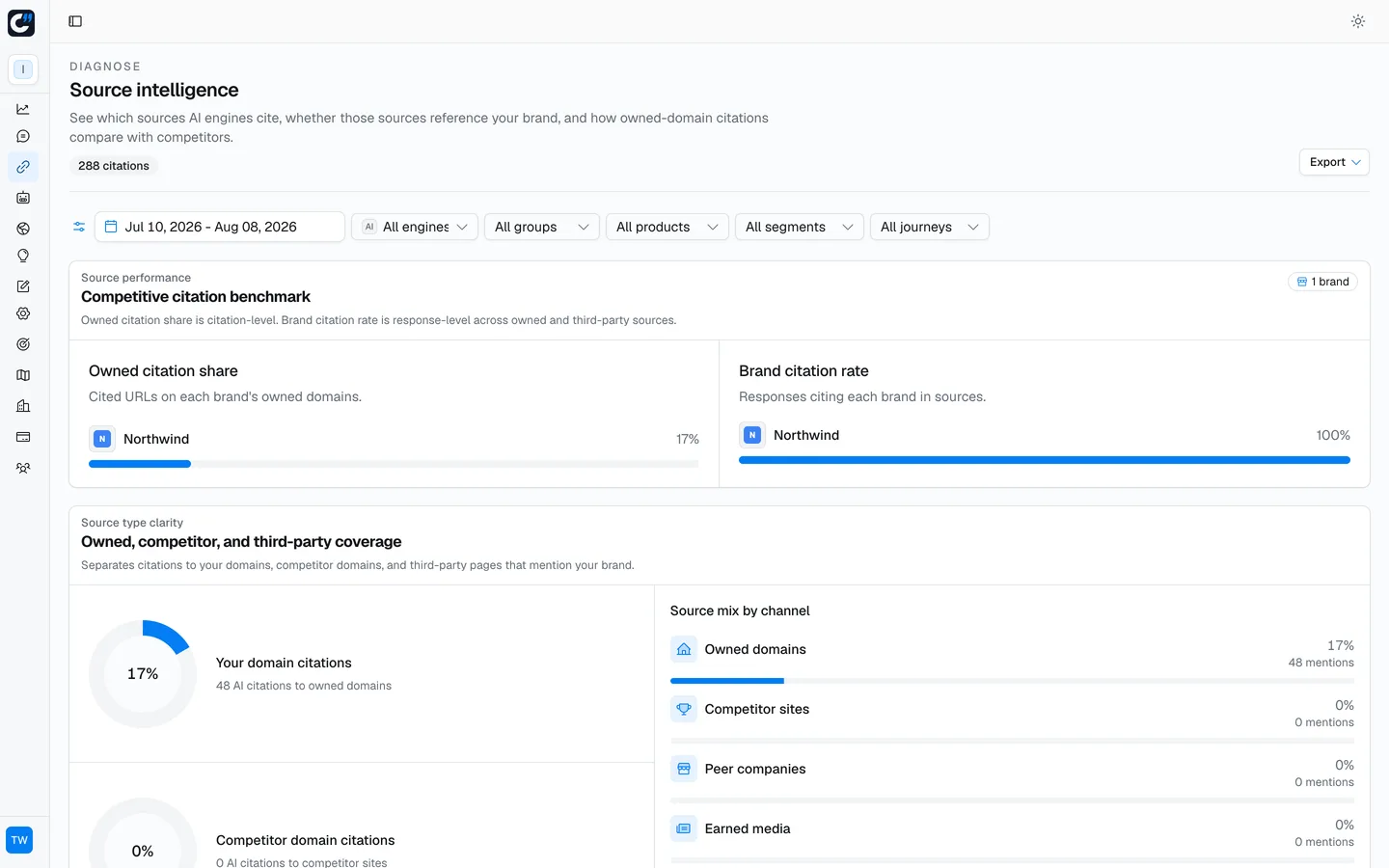
Citlyze covers the full loop we just described. Prompt tracking samples every prompt repeatedly across ChatGPT, Gemini, Perplexity, DeepSeek, ByteDance, and Google's AI surfaces, with Grok on the higher tiers. GEO audits check the optimization side: crawler access, robots policy, and page readiness, following the process in our step-by-step audit guide. Crawler analytics then confirm whether GPTBot and friends fetch what you fixed. Plans start at $29/month with Google's AI surfaces included on every tier; the AEO tool page has the full feature walkthrough.
What Citlyze does not do: track Claude answers, or edit content for you. The audits tell you which page to fix and why; the fixing happens in your own stack.
Otterly.AI: the budget benchmark
Otterly.AI tracks search prompts across seven engines, including Claude, at the same $29 entry price as ours. It is the tool we recommend most often to solo marketers who need mention tracking and nothing else. It stops at the scoreboard: no crawler analytics and thin audit tooling mean you diagnose and fix visibility problems elsewhere. Head-to-head: Citlyze vs Otterly.
Rankscale: coverage per dollar
Rankscale covers ten engines from $20/month, the widest coverage per dollar in the category, and its audit side is more substantial than the price suggests: the product advertises automated checks of the structural and authority signals engines use to verify and cite content. The reporting around the core numbers stays lean, and a growing program will eventually want deeper citation analysis, but as a first AEO tool it sets a hard bar for value. Comparison: Citlyze vs Rankscale.
Knowatoa: the setup checker
Knowatoa approaches AEO from the setup end: configuration checks across seven engines from $59/month, answering "is my site even set up correctly for these systems" before the tracking question. No trial and no crawler analytics, and the optimization guidance is thinner than the checkers imply, but the onboarding angle suits teams that want a guided first step. Comparison: Citlyze vs Knowatoa.
Peec AI and Promptwatch: the mid-range
Peec AI, from $95/month, pairs six-engine tracking with agency-friendly reporting and crawler analytics; for AEO work specifically, its strength is competitor benchmarking rather than page-level audit depth. Promptwatch, also $95/month, trades depth for breadth with ten engines including Mistral and Meta AI. Either works as a mid-range pick; at that spend, compare prompt quotas carefully, because quota exhaustion is the hidden cost in this tier. Comparisons: vs Peec, vs Promptwatch.
Profound, Scrunch, AthenaHQ: the enterprise tier
Profound (from $99/month, no trial, sales-led) adds conversation-volume estimates and content tooling on top of nine-engine tracking. Scrunch AI (from $250/month) is the strongest of the three on optimization, with agent-experience audits of how AI systems traverse your site. AthenaHQ (from $295/month) covers eight engines with a full audit layer. Buy this tier when you need procurement support and managed onboarding, not because the measurement is several times better; our comparisons (vs Profound, vs Scrunch, vs AthenaHQ) go row by row.
What about free graders?
One-shot graders, including HubSpot's AI search grader, give you a single snapshot of one moment on one engine. Useful for a wake-up call, useless for a program: answer variance means a snapshot can flatter or insult you at random. Free utilities that do hold up are generators and simulators, like our llms.txt generator and AI robots.txt builder, because their output does not depend on sampling.
How to evaluate one in two weeks
Whichever names make your shortlist, the same trial protocol separates real AEO tools from dashboards. In week one, load 20 real buyer prompts, add two competitors, and run the tool's audit against your three most important pages; by the end of the week you should have mention rates with visible run counts, a cited-domain list you can sort into owned versus competitor versus third-party, and audit findings specific enough to hand a developer. In week two, ship one audit fix, however small, and watch whether the tool can connect it to anything: a crawler fetching the changed page, a structural check flipping to green, a citation appearing. A tool that cannot close that loop in two weeks will not close it in a year, because the loop is the product.
Two more checks while the trial runs: export the data through the API to confirm the numbers leave the dashboard when you need them to, and compare the tool's answer samples against a few manual spot checks so you trust its collection before you trust its trends.
Which tier do you actually need?
Price in this category tracks process, not measurement quality. Entry plans at $20 to $60 buy the same fundamental capability, answer sampling with rates, that enterprise plans wrap in onboarding, security reviews, and account management. Software is also only one line of the budget, and how much AEO costs puts it next to the DIY and agency options with published numbers for each. So the deciding question is organizational: a marketer who needs numbers picks from the entry tier and upgrades when reporting or seats demand it; a team that needs procurement and vendor management starts at the top and pays for the wrapper knowingly.
Two neighbouring roundups pick up where this one stops: best AI SEO tools covers the content, suite, and crawling tools that sit outside AEO tracking, and the Profound review goes through the enterprise tier's pricing ladder in detail.
Whatever tier fits, evaluate on your own category rather than anyone's demo data. Most tools here offer a trial; ours takes an afternoon to set up, and by the next day you know which answer engines mention you, which cite you, and which hand your buyers to someone else.