Best Generative Engine Optimization (GEO) Tools (2026)
GEO tools compared: which platforms actually measure and improve your presence in generative answers, what they cost, and where each one stops.
 ChatGPT
 Claude
 Perplexity
 Grok
GrokOn this page
A generative engine optimization tool measures whether AI engines name and cite your brand when buyers ask questions, then tells you what to change. In 2026 the honest split is: everything in this category does the measuring, most do it with different rigour, and only some do anything about the second half. Entry pricing runs $20 to $99 a month, with enterprise platforms starting around $250.
GEO and AEO describe the same discipline, so this list overlaps heavily with our AI visibility tools roundup. The difference is framing: this page grades tools on the GEO workflow specifically, meaning measure, diagnose, fix, re-measure. If you want the same market sorted by engine coverage, start there instead.
We build Citlyze, which appears below. Every price came off the vendor's own pricing page in August 2026.
What a GEO tool has to do
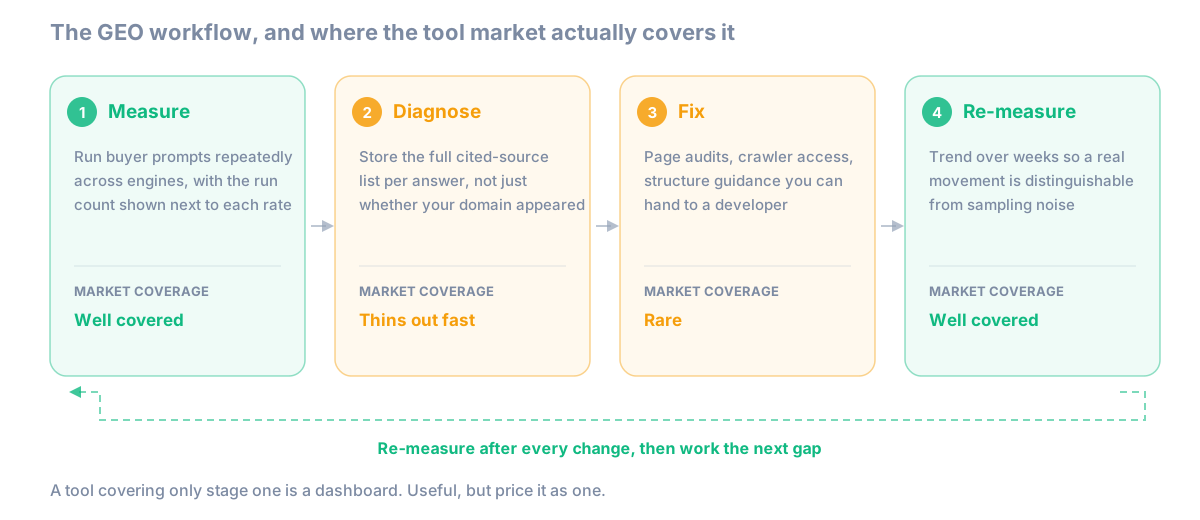
Measure. Run your buyer prompts repeatedly across engines and report mention rate, citation rate, position, and competitor share of voice. The bar is repeated runs with the count visible, because identical prompts return different answers.
Diagnose. Store the full cited-source list per answer, not just whether your domain appeared. This is what turns a report you read into a list you act on, and it is where the category thins out fastest.
Fix. Page audits, crawler-access checks, structure guidance, and ideally something that connects a shipped change to a measured outcome.
Re-measure. Trends over weeks, so you can tell a real movement from sampling noise.
A tool covering only the first stage is a dashboard. That is not worthless, but price it accordingly.
The tools
| Tool | From | Strongest at | Notable gap |
|---|---|---|---|
| Citlyze | $29/mo | Sampling depth, audits, crawler analytics | No Claude, no blue-link rankings |
| Rankscale | $20/mo | Engine breadth on a small budget | Lighter reporting and diagnosis |
| Otterly.AI | $29/mo | Simplicity, low entry price | 15 prompts, no crawler-side data |
| Profound | $99/mo | Real-user prompt demand data | ChatGPT only at $99; 9 engines means Enterprise |
| Scrunch | $250/mo annual | Page audits and personas, agency shape | No entry below $250 |
| Athena | $295/mo | Enterprise interface, free tier to trial it | Credit model needs sizing |
| Evertune | $800/mo | Category-level measurement at volume | Not built for page-level fixes |
Citlyze
Covers all four stages in one workspace: repeated-run sampling across eight surfaces on every plan with the run count next to each rate, the full cited-domain list per answer, GEO audits that check crawler access and content readiness, and crawler analytics showing whether the bots actually fetch your pages. From $29/month, self-serve.
Where it stops: no Claude tracking, and no classic Google rankings, so it sits alongside a rank tracker rather than replacing one. We build it, so weigh this entry accordingly and use the buyer's checklist on us.
Rankscale
For the measure stage on a small budget, $20/month watches more engines than tools costing five times as much, Claude and Mistral among them. If your GEO question is "which engines mention us at all", this answers it more cheaply than anything else.
Where it stops: the diagnose and fix stages. You get the rates and not much around them, so plan to do the source analysis yourself.
Otterly.AI
The gentlest on-ramp at $29/month, with an interface aimed at marketers rather than analysts. Good for a single product line in a single market.
Where it stops: the entry tier holds 15 tracked prompts, and every market you add draws more slots from that same pool. No crawler-side data either, so you see the answers without knowing whether engines can reach you.
Profound
The demand-side outlier. Conversation Explorer reports what people are actually asking AI in your category rather than only the prompts you chose, which is a genuinely different input and hard for competitors to match.
Where it stops: the measure stage of a GEO loop wants several engines, and that is exactly where the ladder bites. $99 buys ChatGPT alone, three engines costs $399, and all nine sit behind a sales conversation. Detail in our Profound review.
Scrunch
Built around the agency workflow: three user licences, page audits, and personas included at the entry tier, across ChatGPT, Claude, Gemini, Perplexity, Google's AI surfaces, and Meta. It takes the fix stage more seriously than most.
Where it stops: the floor. $250/month annually with nothing below it, which prices out anyone testing whether GEO matters to them.
AthenaHQ
Athena at $295/month is an enterprise platform priced in credits rather than prompts. The free tier carries a small allowance, so you can walk through the workflow before any money moves.
Where it stops: the credit model needs sizing against your real prompt set before the sticker price tells you anything.
Evertune
Evertune at $800/month samples at volumes no page team needs, very high prompt counts across 11 models, because its question is how models talk about a whole category.
Where it stops: the fix stage. If your GEO loop ends at deciding which page to change, this is the wrong shape of tool.
The three-way comparison buyers most often run is in Profound vs Otterly vs Scrunch.
What no GEO tool does
Worth stating, because the category's marketing implies otherwise.
None of them get you cited. They measure and diagnose. The work that moves the numbers is content, structure, and third-party presence, and most of the last one happens through outreach rather than software. In our August 2026 study, vendor-owned domains took 15.3% of ChatGPT's citations and 3.9% of Perplexity's, so the majority of what engines repeat about your category lives on pages no tool can edit.
None of them can promise placement. No engine sells position inside an organic answer.
None of them agree with each other. Different run counts, engines, and detection rules produce different rates for the same brand on the same day. That is a reason to check the methodology, not a reason to average two tools.
Free before paid
Three things cost nothing and answer most first questions. Our AEO grader scores a page's structural readiness. Bing Webmaster Tools reports your real Copilot citations, which is first-party data no vendor can sell you. And the manual protocol, twenty prompts run five times each, produces a genuine baseline in a few hours.
The wider free set is in free AI SEO tools, and the tools worth paying for beyond GEO specifically are in best AI SEO tools.
Choosing without a demo
Four questions decide this faster than any feature list.
- How many runs per prompt per window, and is the count on screen? Everything downstream depends on it.
- Do you store the full cited-source list? If not, the tool can report your rates but never explain them.
- Which engines are on the plan I would actually buy? Entry tiers and marketing pages often describe different products.
- What does it tell me to do next week? The gap between measuring and diagnosing is where price stops correlating with value.
Then let the workflow itself decide. Point a trial at the prompt set you built and check whether stage two shows up: a cited-source list you could hand to a writer as next week's brief. A tool that only produces the rates has already told you which stage it stops at.
If you are earlier than the buying stage, what is generative engine optimization covers the discipline and how to do AEO is the ordered playbook that software supports rather than replaces. What Citlyze itself does for GEO is on the generative engine optimization tool page.