Best AI Visibility Tools in 2026, Compared
The top AI visibility tools compared on documented pricing, engine coverage, and measurement method, for tracking brand mentions in ChatGPT, Gemini, and more.
 ChatGPT
 Claude
 Perplexity
 Grok
On this page
The best AI visibility tools in 2026 are Citlyze for teams that want repeated-run measurement without enterprise pricing, Profound for enterprise programs with dedicated support, Otterly.AI for solo marketers on a budget, and Scrunch AI for large brands that need agent-experience audits. The category has grown to dozens of vendors, and most of them show you screenshots dressed up as data.
We build Citlyze, so treat this roundup the way you would treat any vendor's list: as a starting shortlist with checkable claims. Every price and coverage fact below has a source you can verify in one click, and we point out where competitors beat us.
What an AI visibility tool has to do
Four jobs separate a measurement tool from a dashboard demo:
- Sample answers repeatedly. AI answers change between identical runs, so a tool that checks each prompt once reports luck, not visibility. Ask every vendor for the run count behind their rates.
- Track citations, not just mentions. A mention tells you the outcome. The cited domains tell you why, and which sources you need to win. Our guide to share of voice in AI answers shows what a trustworthy readout looks like.
- Cover the engines your buyers use. ChatGPT alone is not coverage. Gemini, Perplexity, Google's AI Overviews and AI Mode, and Bing Copilot each answer with different sources and different favorites.
- Keep history next to traffic. A month of data cannot show a trend. Check how long the plan keeps history, and whether the tool puts AI-referred visits from Google Analytics beside visibility, so you can report AI search performance over time instead of a snapshot. Our guide to AI search tracking reports shows what that report looks like.
A word on method, since every roundup should show one. Entries below are graded on those four jobs using each vendor's published pricing and documented engine coverage, the same dataset behind our scheduled comparison pages, last checked on October 19, 2026, with every vendor's site linked so you can re-check anything. We have not run paid hands-on trials of nine competitors and do not pretend otherwise; where a line is judgment rather than documented fact, it reads like one. And we are in the list, disclosed and first, so apply the same skepticism to our entry that you would to theirs.
Comparison table
| Tool | From | Free trial | Engines | Crawler tracking | API |
|---|---|---|---|---|---|
| Citlyze | $29/mo | 14 days, no card | ChatGPT, Gemini, Perplexity, DeepSeek, Google AI Overviews and AI Mode, Bing Copilot (Grok on higher tiers) | Yes | Yes, plus MCP |
| Otterly.AI | $29/mo | Yes | 7 incl. Claude | No | Yes |
| Rankscale | $17/mo (yearly) | Yes | 11 incl. Claude, Mistral, Grok | No | Yes |
| Knowatoa | $59/mo | Yes | 7 incl. Claude, Meta AI | No | Yes |
| Peec AI | $95/mo | Yes | 6 | Yes | Yes |
| Promptwatch | $95/mo | Yes | 11 incl. AI Mode, Mistral, Meta AI | Yes | Yes |
| Profound | Custom | 7 days | Up to 9 incl. AI Mode, Claude | Yes | Yes |
| Semrush AI Toolkit | $99/mo per domain (yearly), or in plans from $199 | 7 days | 5 incl. AI Mode | No | No |
| Scrunch AI | $250/mo | Yes | 4 on Core, 9 on Enterprise | Yes | Yes |
| AthenaHQ | $295/mo | Yes | 11 incl. Claude, Grok | No | Add-on |
Pros and cons at a glance
| Tool | Pros | Cons |
|---|---|---|
| Citlyze | 7 surfaces on every plan from $29; repeated runs with counts shown; AI traffic beside visibility | Claude is a paid add-on; Google surfaces weekly, not daily; 1 seat on Starter |
| Profound | Prompt-volume data; SSO and SOC 2; up to 9 engines | No self-serve paid plan for brands; trial is 7 days on 3 engines |
| Otterly.AI | $29 entry; unlimited countries and team members | 15 prompts on Lite; Gemini, AI Mode and Claude are add-ons |
| Scrunch AI | 125 prompts and 5 seats at entry; site audits | 4 engines below Enterprise; API on Enterprise only |
| Peec AI | Unlimited users; shopping, ads and fact-checking listed | Choose 3 models per plan; API on Enterprise |
| Promptwatch | 11 engines including AI Mode; API and MCP on every paid plan | $95 buys 50 prompts and 1 seat |
| Semrush AI Toolkit | Sits inside a suite you may already use | 5 engines; priced per domain |
| Ahrefs Brand Radar | 492M-prompt index; custom prompts in every paid plan | Lite covers 5 prompts on one platform; index re-tested monthly |
Citlyze
Best for: teams that want real measurement from $29/month.
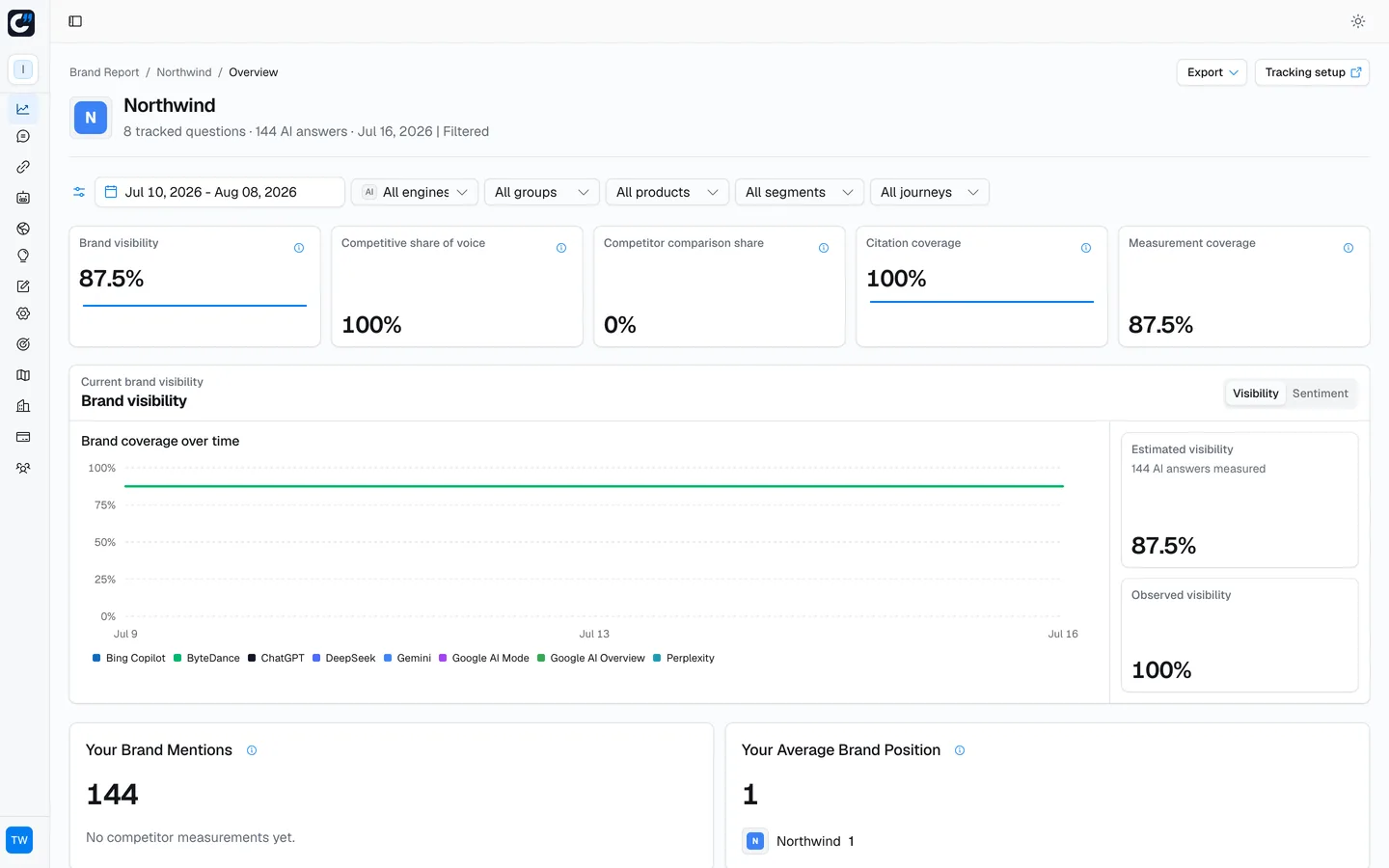
Citlyze runs each tracked prompt repeatedly per measurement window and reports mention rate, citation rate, and share of voice with the run counts visible next to every number. Coverage includes Google's AI surfaces on every plan, which several competitors gate behind higher tiers. The workspace also watches the input side: AI crawler tracking shows whether GPTBot, ClaudeBot, and PerplexityBot fetch your pages, so you can connect infrastructure to outcomes.
Beyond tracking, the workspace closes the loop in both directions: GEO audits check whether your pages are structurally ready to be cited, crawler capture installs via a WordPress plugin or a Node middleware for everyone else, scheduled reports and Slack or Teams alerts carry the numbers to where your team already works, and a read-only API plus an MCP server let your own stack, or your own AI assistant, pull any number in the dashboard.
Where we lose: Claude is a paid add-on on our plans, and enterprises that want managed onboarding and quarterly business reviews will find more hand-holding at Profound or Scrunch. Judge us against the checklist in our buyer's guide; it was written to be turned against its author.
Profound
Best for: enterprise programs with budget for process.
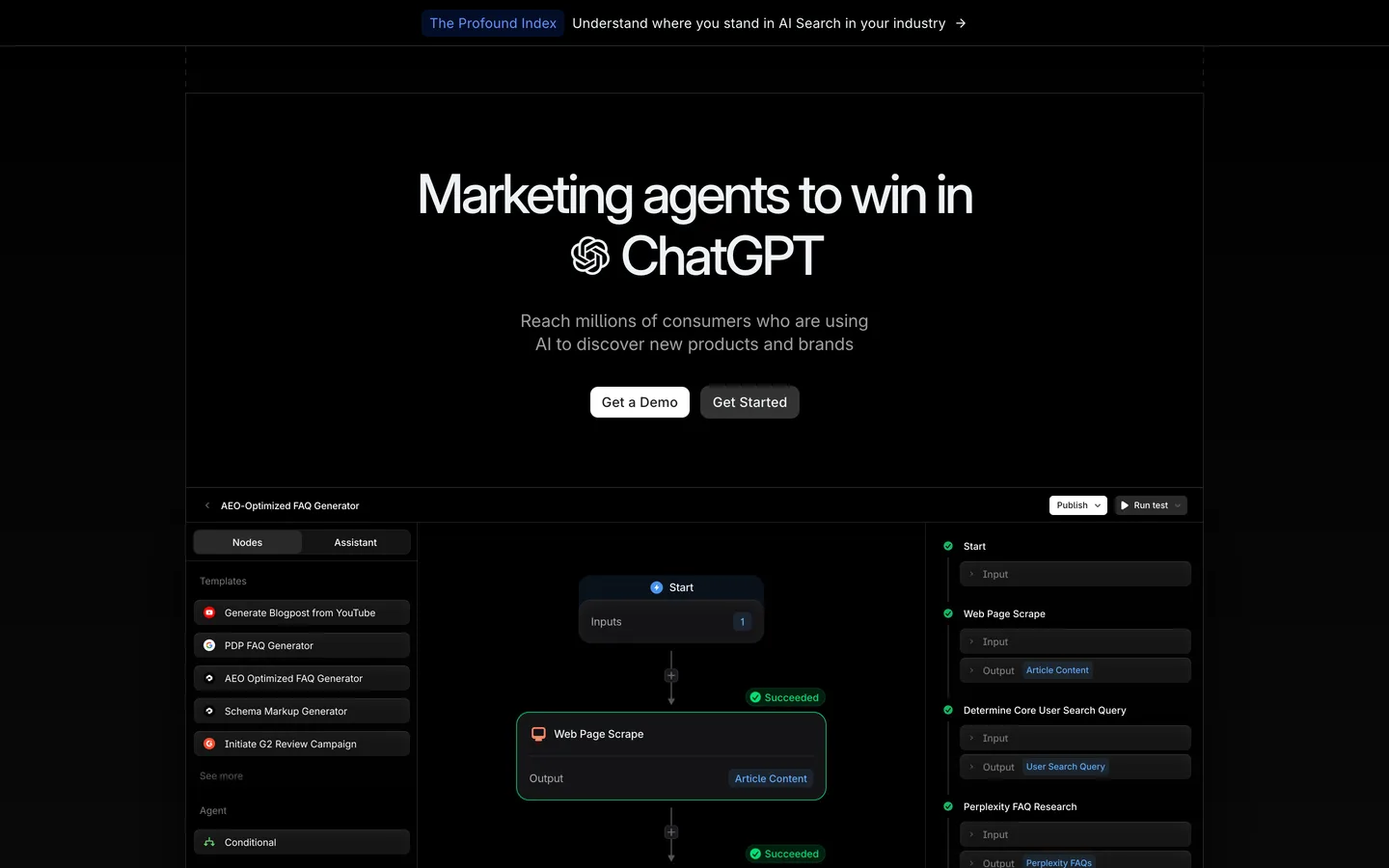
Profound is the best-known name in the category. Its Enterprise plan tracks up to nine answer engines: ChatGPT, Perplexity, Google AI Mode, Gemini, Microsoft Copilot, DeepSeek, Claude, Google AI Overviews, and Exa Search. The platform leans enterprise in every other way too: prompt-volume data, AI Marketer agents that run on credits, agent analytics, SSO, and SOC 2.
Check what you can actually buy before you compare it against the table above. As of October 2026, Profound's brand pricing page lists a free 7-day trial (50 prompts on ChatGPT, Gemini, and Google AI Overviews) and a custom Enterprise plan; the $99 and $399 self-serve tiers it sold earlier in 2026 are gone. Agencies can still self-serve Agency Growth, with client workspaces at $399 a month each. Our full Profound review covers the change. If your program needs procurement-grade vendor management, the process is a feature; if you want to see your own data today, it is a wall. Best fit: enterprise brands and large agencies buying a vendor relationship alongside the measurement. We keep a detailed Citlyze vs Profound comparison current.
Otterly.AI
Best for: solo marketers and small teams.
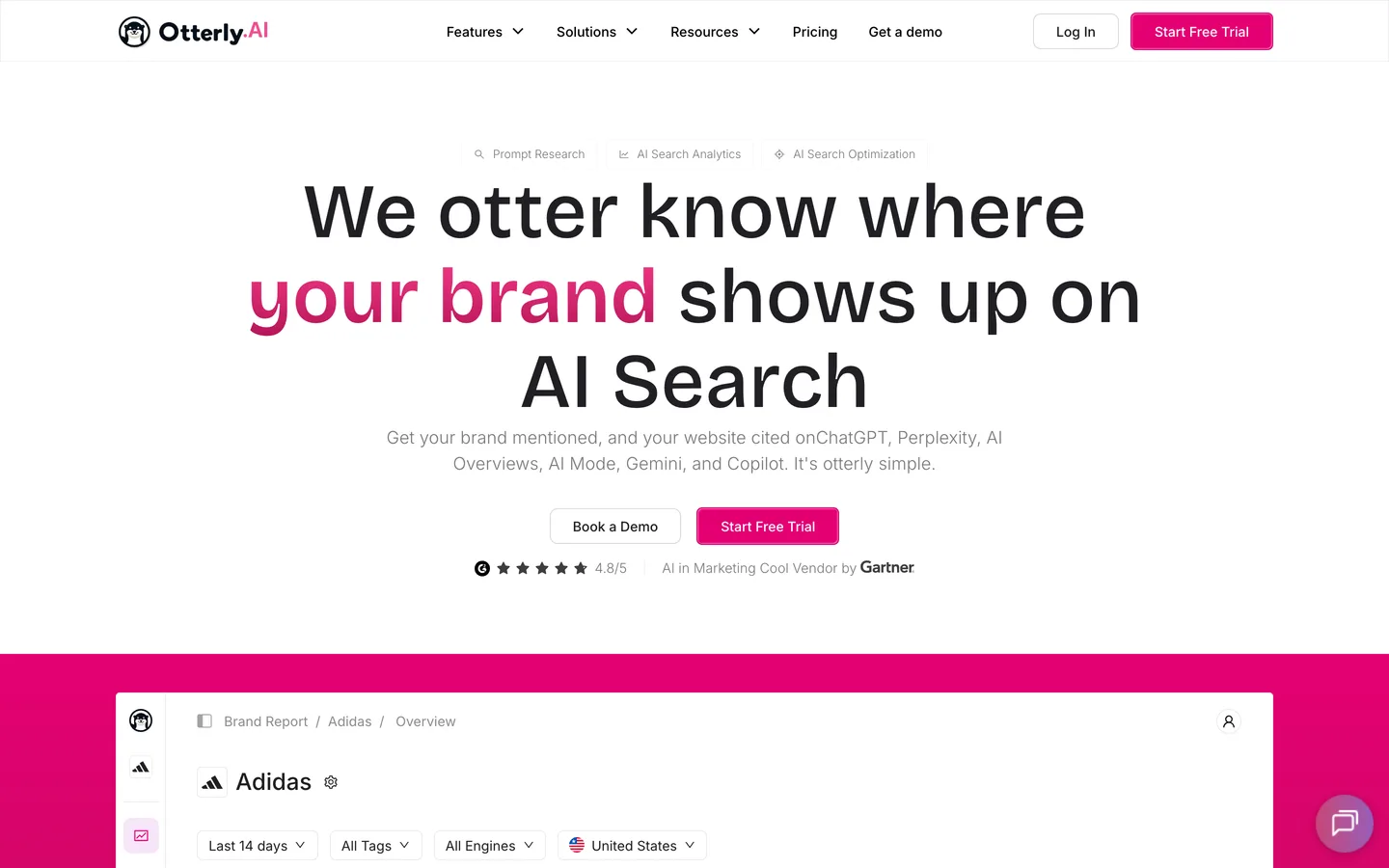
Otterly.AI matches our entry price at $29/month and covers seven engines: ChatGPT, Google AI Overviews and AI Mode, Perplexity, Microsoft Copilot, Gemini, and Claude, one of the few budget tools with both Google surfaces and Claude on the list. Monitoring is search-prompt based with a clean interface that non-SEO marketers pick up fast, a free trial to test with, and API access even at the low end.
The gaps: no crawler-side analytics, so you see the answers but not whether bots reach your site, and entry-tier quotas run out fast: Lite carries 15 prompts, with every additional market claiming slots of its own, so budget from your full prompt-times-market count rather than the sticker price. Best fit: a solo marketer or small team that wants credible multi-engine monitoring this week without a procurement conversation. Comparisons: Citlyze vs Otterly, and Profound vs Otterly vs Scrunch for the three-way.
Scrunch AI
Best for: large brands auditing the full agent journey.
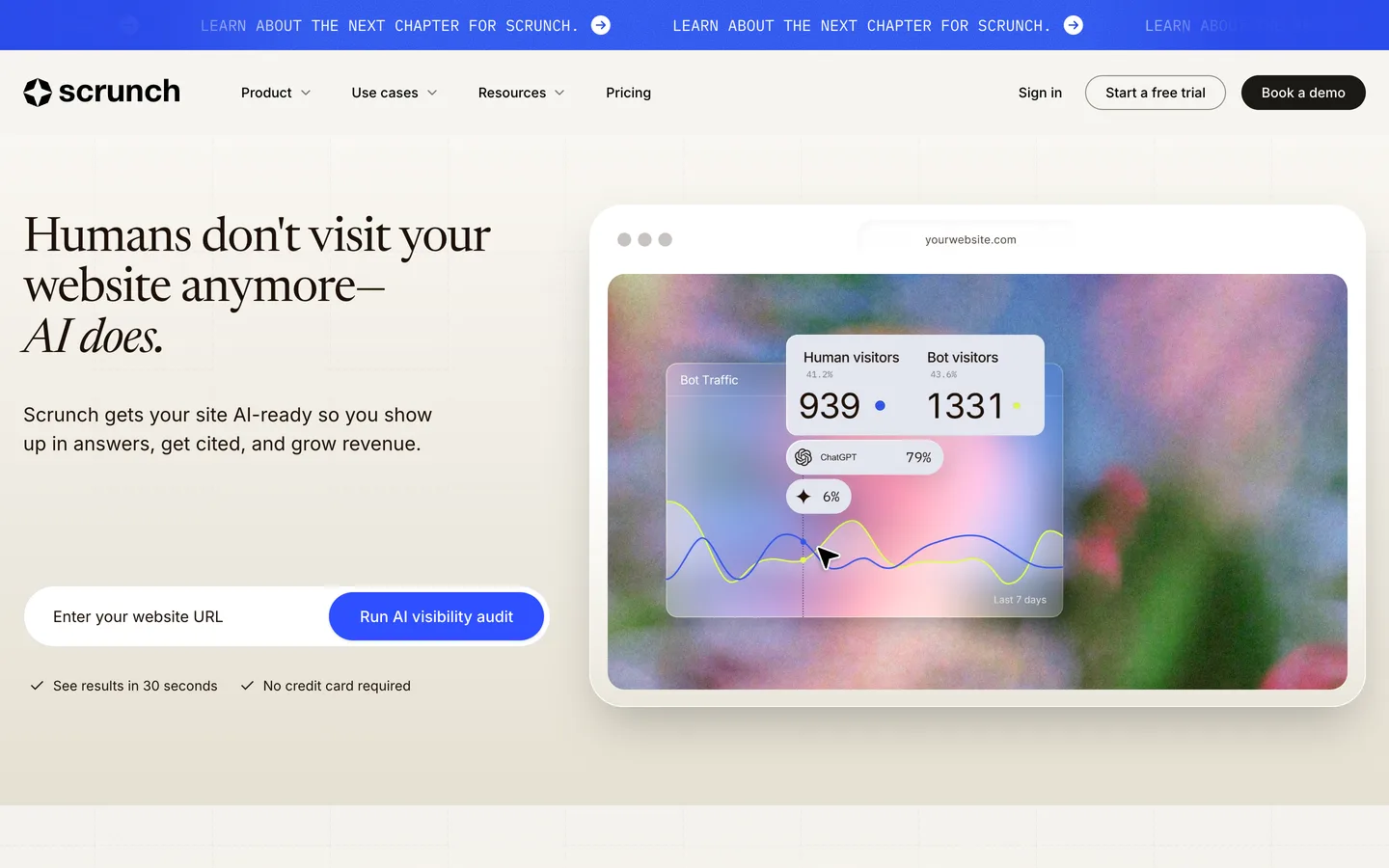
Scrunch AI frames the problem as "agent experience": how AI systems traverse and interpret your site, not just whether they mention you. Coverage spans nine engines on Enterprise (ChatGPT, Claude, Gemini, Perplexity, both Google AI surfaces, Copilot, Grok, and Meta AI) and four on the entry plan, with crawler tracking, an enterprise API, and site-audit tooling aimed at enterprise content and web teams, plus a trial, which is rarer in the enterprise tier than it should be.
From $250/month, the entry point is roughly eight times ours, and that is the decision in miniature: mid-market teams usually cannot justify it unless the agent-experience audits replace another line item, while large brands rebuilding their site for AI traversal will find tooling here that the cheaper tier simply does not have.
Peec AI
Best for: European agencies running client reporting.
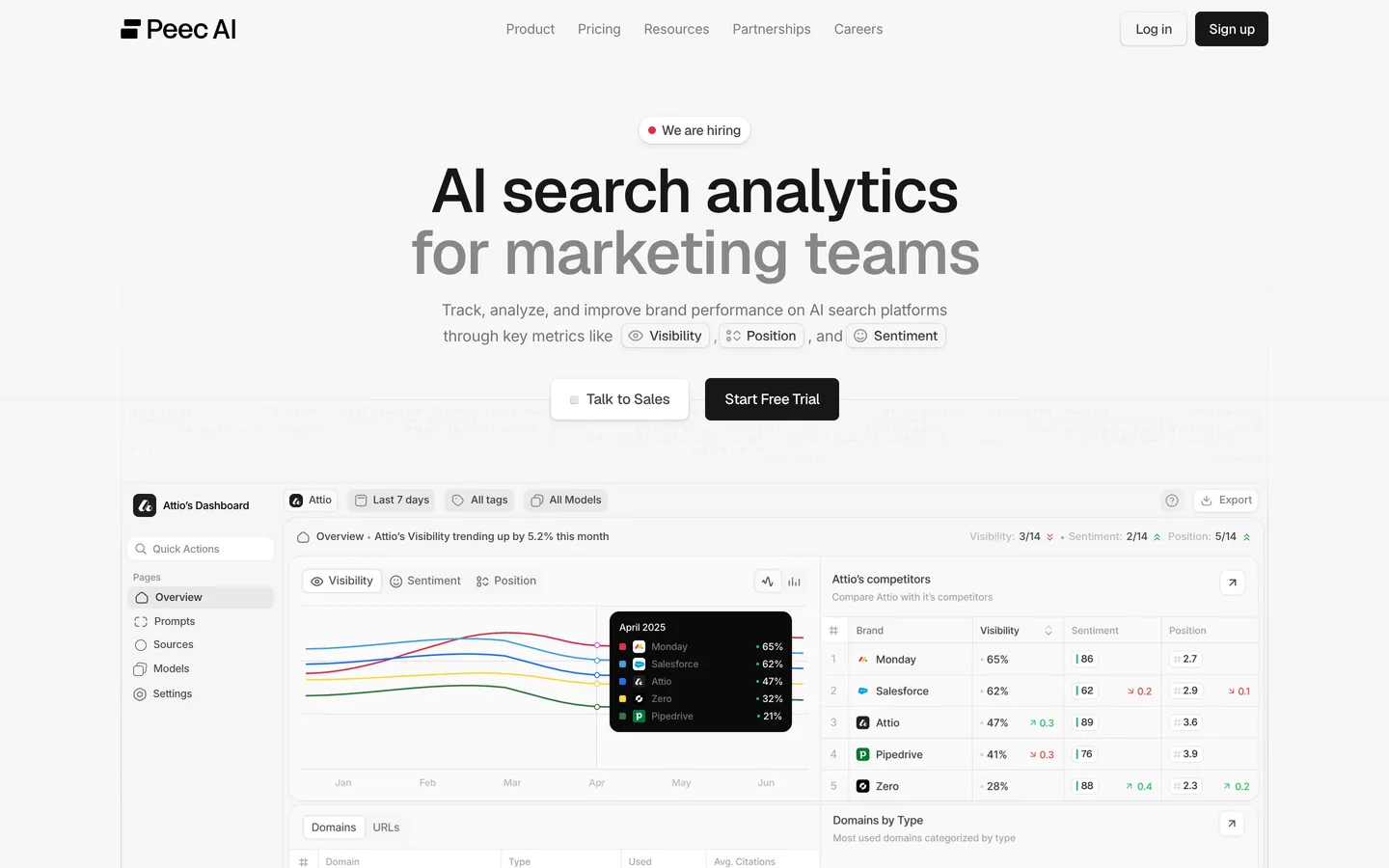
Peec AI covers six engines (ChatGPT, both Google AI surfaces, Microsoft Copilot, Perplexity, and Gemini) with solid share-of-voice reporting and crawler analytics, from $95/month with a trial. It has grown fast in European agency circles, and the per-workspace model maps well to client rosters, which is exactly who it fits: an agency standardizing client reporting on one tool. No Claude coverage, and the entry price buys fewer prompts than similarly priced rivals, so model your real prompt volume before comparing on sticker price. The Peec AI alternatives comparison does that arithmetic for five rivals.
Promptwatch
Best for: broad model coverage on a mid-range budget.
Promptwatch tracks eleven engines including Google AI Mode, Mistral, and Meta AI, with crawler tracking included, from $95/month for 50 prompts. Coverage breadth is the pitch, and at this price it is the widest list you will find. The open question to press on a demo is depth per engine: ten surfaces sampled thinly tell you less than five sampled properly.
Semrush AI Toolkit
Best for: teams already paying for Semrush who want a first look.
The Semrush AI Toolkit bolts AI visibility onto the suite you may already rent, and as of October 2026 Semrush sells it two ways: standalone at $99 a month per domain billed yearly, with 25 prompts, or bundled into its SEO and AI Search plans, with 50 prompts tracked daily on the $199 Starter plan and 100 on Pro+ at $299. Advanced is now custom-priced, and the $139 SEO plan sits below the AI tracking. As a first taste of the category inside familiar tooling it works, and the adjacency to your existing keyword data is genuinely convenient. As a measurement program, the engine list is narrower than the specialists and the AI data lives inside Semrush, so check what you can export before you build reporting on it.
Ahrefs Brand Radar
Best for: Ahrefs shops that want AI mentions next to backlink data.
Ahrefs Brand Radar rides on Ahrefs' index and covers both Google AI surfaces, ChatGPT, Perplexity, Gemini, and Copilot, with Claude on custom prompts. Ahrefs plans include it with small prompt allowances (5 tracked prompts a day on Lite at $129/month, 10 on Standard, 20 on Advanced); tracking at real volume means prompt packs from $50/month or a standalone Brand Radar subscription from $199/month. The strength is context: AI mentions sit next to the backlink and keyword data your team already lives in, and for the link-building work that drives third-party citations, that adjacency is real leverage. The open question is sampling depth on the AI side, where repeated-run methodology is not the product's center of gravity; press on run counts during the demo.
Also worth a look
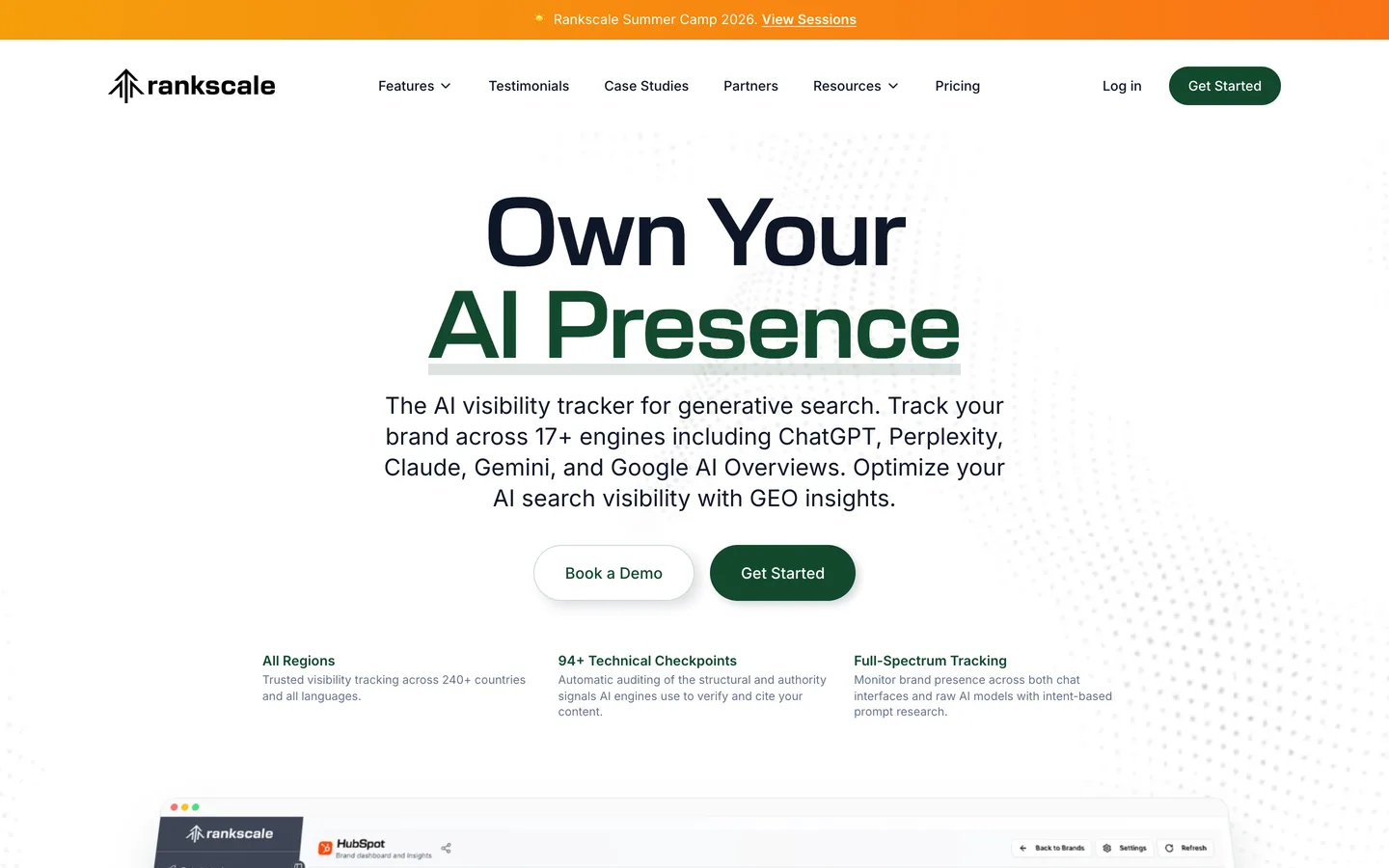
- Rankscale, from $17/month billed yearly, is the cheapest way to track 11 named engines, including Claude, Mistral, Grok, and DeepSeek alongside the majors. Expect a leaner feature set around the core tracking, and treat it as a strong second opinion or a first program on a minimal budget.
- Knowatoa, from $59/month, covers seven engines with a straightforward setup and a free trial.
- AthenaHQ, from $295/month, is a credible enterprise alternative to Profound with 11 models on its Starter plan.
How to pick from this list
Before you shortlist, run an AI visibility gap analysis on a few buyer questions: it tells you which engines and sources matter for your brand, which is the real test of any tool on this page. Then shortlist two or three and run the same evaluation on each: bring your real prompt list, ask for the run counts behind every rate, check which engines the plan you would buy actually includes, and pull data over the API before you sign. The full eight-question checklist is in how to choose an AI visibility tool, and if your shortlist has narrowed to the enterprise names, Profound vs Otterly vs Scrunch puts their published tiers side by side.
If the gap you are trying to close is people rather than measurement, best AI SEO agencies covers the services market and where software stops being the answer. For the same field graded on the GEO workflow rather than engine coverage, see best GEO tools.
Every tool on this page does one job: measuring whether AI engines name you. If your budget also has to cover content optimization or technical auditing, best AI SEO tools splits the wider market by job so you do not buy a tracker to answer a content question.
Resist engine-count maximalism while you shortlist. Buyers cluster on ChatGPT and Google's AI surfaces in most markets, with Perplexity and Copilot next depending on audience; coverage beyond the engines your buyers use is dashboard decoration. If you are still deciding which of these numbers deserves your attention in the first place, what is AI visibility defines each metric and how to read them together. Free one-shot checkers, including our own free tools for llms.txt, AI robots.txt, and prompt research, are fine for a first look, but continuous tracking has compute costs no free tier survives, so budget for the $20 to $99 range and spend the difference on a better prompt set. A focused list sampled properly beats a thousand prompts checked once on any plan.
The last evaluation step costs nothing: most of these tools, ours included, will show you your own brand's numbers on a trial before any money moves. Judge the category on your data, not on anyone's listicle, this one included.