Profound vs Otterly vs Scrunch: AI Visibility Tools Compared
Profound, Otterly, and Scrunch compared on engine coverage, prompt quotas, and real pricing, plus the tail of the market and when none of the three fits.
 ChatGPT
 Claude
 Perplexity
 Grok
GrokOn this page
These three tools get compared constantly and barely compete with each other. Otterly starts at $29/month and sells prompt tracking to individual marketers. Scrunch starts at $250/month and sells a monitoring platform to agencies and mid-market teams. Profound starts at $99/month for ChatGPT alone and does its real work in a sales-led enterprise tier. Pick by team shape and market count, because those decide the price by a factor of ten before any feature does.
All pricing below was read off each vendor's own pricing page in August 2026. We build Citlyze, a competitor to all three, which is exactly why every figure here links to the source.
The three, side by side
| Profound | Otterly.AI | Scrunch | |
|---|---|---|---|
| Entry price | $99/mo (annual) | $29/mo | $250/mo annual, $300 monthly |
| Engines at entry | ChatGPT only | Multi-engine | ChatGPT, Claude, Gemini, Perplexity, Google AI Mode and Overviews, Meta |
| Prompts at entry | 50 | 15 | 350 custom + 1,000 industry |
| Seats at entry | 1 | Not seat-gated | 3 |
| Next tier | $399/mo, 3 engines, 100 prompts | $189/mo, 100 prompts | $417/mo annual, 700 custom prompts |
| Self-serve | Starter and Growth | Yes | Yes |
| Multi-market | Enterprise tier only | Each region consumes a prompt slot | All tiers |
| Standout | Real-user prompt demand data | Lowest entry price in the category | Page audits and personas on every tier |
Read the prompt column with suspicion, and not only on this table. A prompt slot is not a standard unit: 50 prompts checked weekly on one engine and 50 prompts run daily across six are the same number describing wildly different amounts of measurement. Before comparing quotas across any two vendors, ask each one how many times a prompt runs per window and on how many engines, then compare runs rather than slots. Our buyer's guide turns that into a list of questions to send before a demo.
Profound: buy it for the demand data
Profound's monitoring is competent and its packaging is enterprise-first, but neither is the reason to choose it. The reason is Conversation Explorer, which reports what real users are asking AI in your category rather than only what you thought to track. Every other tool in this comparison measures a prompt list you wrote; this one tells you what the prompt list should have been.
That capability sits behind the platform's economics. Starter at $99/month covers ChatGPT, 50 prompts, one seat, one language, one region. Growth at $399/month reaches three engines and 100 prompts, still single-market. Nine-engine coverage is Enterprise, which means a sales cycle. Profound raised a $96 million Series C at a $1 billion valuation in February 2026 and Fortune reported over 700 enterprise customers at the time, so the company is built for that motion rather than apologizing for it.
Choose it when procurement, security review, and a category-level demand question all point the same direction. Our full Profound review walks the tier ladder in detail.
Otterly.AI: buy it for the entry price
Otterly.AI is the cheapest serious way into prompt tracking. Lite is $29/month for 15 tracked search prompts; Standard is $189/month for 100; Premium is $489/month for 400. The free trial ships with 50 prompts, which is more generous than the paid Lite tier and makes the trial a genuine test rather than a teaser.
Two structural details decide whether it fits. Prompts are country-specific, so tracking the same question in three markets consumes three slots, and multi-market teams should do that arithmetic before comparing the headline price to anything. And extra prompt packs are available on Standard and Premium but not on Lite, so growth out of the entry tier is a tier jump from $29 to $189 rather than a gentle slope.
Choose it when one person tracks one market and the honest prompt count is under 20. That describes a lot of teams starting out, and starting is the point.
Scrunch: buy it for the seats and the audits
Scrunch prices like an enterprise tool and publishes its numbers like a self-serve one, which is rarer than it should be. Starter is $300/month monthly or $250/month annually, and it is the only entry tier in this comparison that includes three user licences, five page audits, three personas, and the full platform list, from ChatGPT and Claude through Gemini, Perplexity, Google's AI surfaces, and Meta. Growth doubles most of that at $417/month annually.
The persona and page-audit framing is what separates it: Scrunch is built around the workflow of diagnosing pages and reporting to someone, which is agency work. If your output is a monthly client deck rather than a dashboard you check on Tuesdays, that shape saves real hours.
The catch is the floor. There is no way into Scrunch below $250/month, which is roughly nine times Otterly's entry and prices out the individual marketer testing whether any of this matters.
Which one, by team shape
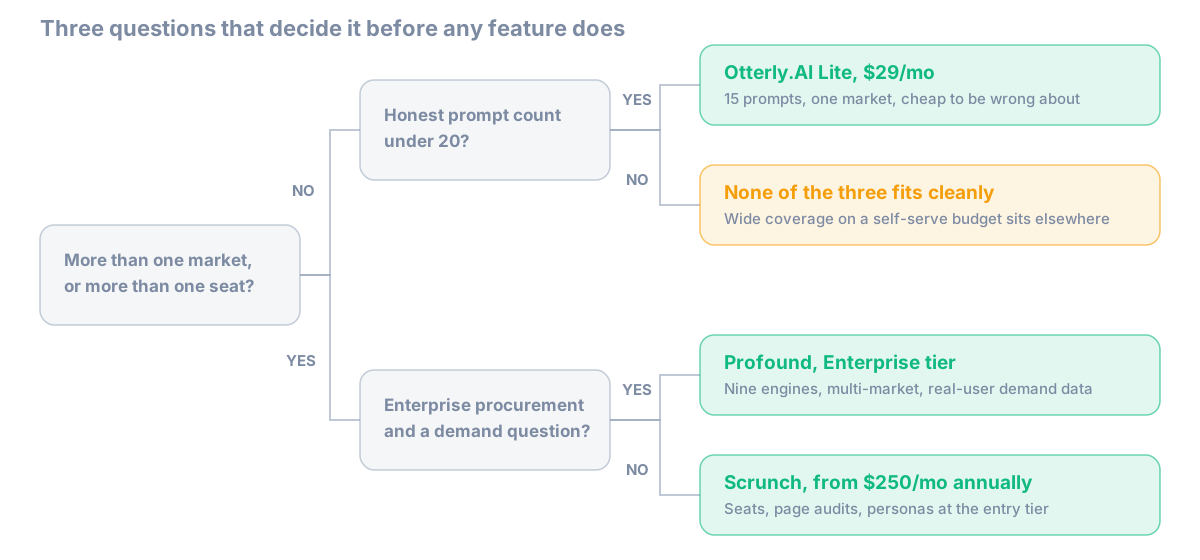
One person, one market, testing the waters. Otterly Lite. Fifteen prompts is thin, but it is enough to learn whether AI answers name you at all, and $29 is cheap enough to be wrong about.
Agency reporting on client brands. Scrunch. Seats, page audits, and personas are included at the entry tier rather than sold up, and published pricing means you can quote a client without a call.
Enterprise with a demand-side question. Profound. Nobody else sells the real-user prompt dataset, and enterprise buying processes are where its packaging stops being friction.
Four or more engines on a marketing budget, self-serve. None of the three, which is the honest answer and the reason the last section exists.
The rest of the field
The comparison queries do not stop at three names, so here is where the adjacent tools sit, checked in August 2026.
Evertune publishes a Pro plan at $800/month covering 100,000 tracked prompts across 11 models. That volume is category-level brand measurement, built for teams asking how models describe a market, not which URL to fix.
Athena lists a $295/month Starter tier with a credit-based model across nine models, plus a free tier carrying a small credit allowance. The free tier makes it the cheapest way to see an enterprise-shaped interface before committing to one.
Hall is no longer an independent option: Hall's site announced its acquisition by Tracksuit in July 2026, with the product folding into Tracksuit's brand-health platform and new users directed to a waitlist. If a comparison article still ranks it as a live buying choice, that article is stale.
Bluefish publishes no pricing and routes every enquiry to a demo. Absent public numbers, treat any figure you read about it as inference, including the ones on tool-comparison sites.
Unpublished pricing is itself a data point: in this category it usually means an enterprise sales motion, with an evaluation cycle measured in weeks and a committee at the end of it.
Or run the shortlist yourself
The table narrows the field; your own data should pick the winner. Whichever of these you shortlist, start their trials, load the buyer prompts you already care about, and ask each vendor to show the runs behind every rate it reports. Expect the tools to disagree about you, which is useful in itself: the vendor that can explain its number is the vendor to keep.
Citlyze is a reasonable third name on that shortlist if you landed in the fourth case above, wanting four or more engines self-serve on a marketing budget: eight tracked surfaces on every plan from $29/month (ChatGPT, Gemini, Perplexity, DeepSeek, and ByteDance daily, plus weekly Google AI Overviews, Google AI Mode, and Bing Copilot), Grok on the higher tiers, self-serve, with run counts shown next to every rate. It does not track Claude, and it has nothing like Profound's demand dataset. The wider field, including the tools that beat all four of us on specific jobs, is in best AI visibility tools.