How to Fix Negative Brand Sentiment in AI Answers
AI models repeat old narratives. How to audit what ChatGPT and Gemini say about your brand, find the sources feeding the negativity, and fix them.
 ChatGPT
 Claude
 Perplexity
 Grok
GrokOn this page
When an AI assistant says something unflattering about your brand, it is almost never expressing an opinion. It is repeating a source. Fixing it therefore means finding the page carrying the claim and dealing with that, not arguing with the model. The work splits into an audit that identifies the source, a remediation queue ordered by how fixable each source is, and patience, because the timescales range from days to the next model.
Where AI negativity actually comes from
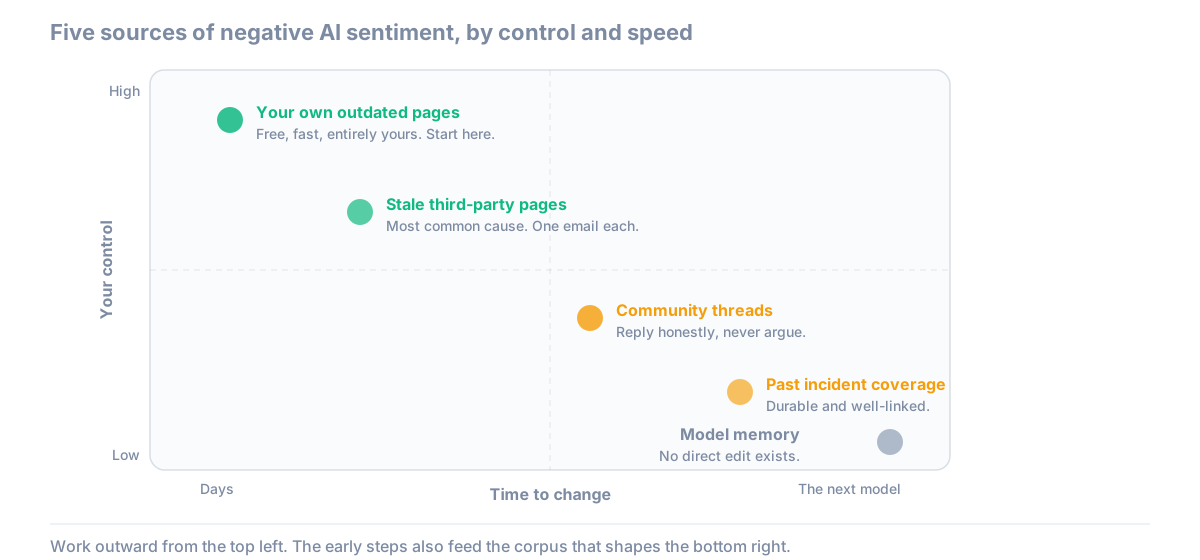
Your own outdated pages. The easiest and most overlooked. A pricing page that still shows a discontinued plan, a docs page describing a limit you raised last year, a comparison page written when your product was thinner. Engines read what is published, not what is current.
A stale third-party page. The most common source of a wrong characterisation. A review roundup written two years ago describes the product you had then, and it keeps getting cited because it ranks. This is where most "we are described as the limited option" problems originate.
Community threads. Reddit, forums, and Q&A sites are heavily represented in retrieval. In our August 2026 study, Reddit appeared in 77% of Perplexity's answers across 200 buyer prompts. A single well-upvoted complaint thread can shape a category's narrative for years.
Past incident coverage. An outage, a pricing change that went badly, a leadership controversy. Press coverage is durable, well-linked, and exactly the kind of source engines trust.
Model memory. The answer given with no retrieval at all, formed from a training corpus that may predate everything you have fixed. Not addressable directly, and the slowest thing on this list. How engines split between memory and live retrieval is covered in how ChatGPT picks sources.
There is a sixth case worth separating: the claim that is simply false and traceable to nothing. Models do fabricate specifics, particularly numbers like pricing and limits. Treat it as an accuracy problem rather than a sentiment one, and see whether it recurs across runs before spending effort on it.
Auditing what engines say about you
Sentiment auditing needs different prompts from visibility tracking. Visibility asks whether you get named in category questions. Sentiment asks how you get described when you already are.
Run two prompt sets, five runs each, in signed-out sessions:
Branded prompts. "Is [brand] any good", "what are the downsides of [brand]", "[brand] reviews", "why do people leave [brand]", "[brand] vs [main competitor]". The negative-framing prompts matter most, because that is what a sceptical buyer types.
Category prompts where you appear. Record the adjective, not just the mention. "X is a solid budget option" and "X is powerful but has a steep learning curve" are both mentions and neither is neutral.
For each run, log four fields: the claim made, whether it is accurate, the sentiment, and any source cited. Score the sentiment on a defined scale rather than a gut call; the brand sentiment tracking method provides the five-point version and the cadence for re-measuring after fixes. That last column, the source, is the whole point of the exercise. When a citation names the page carrying the claim, a vague reputational worry becomes one concrete task.
Do this per engine. Answers diverge sharply, and a problem on Perplexity may not exist on ChatGPT at all, for the structural reasons covered in why AI answers change.
The remediation playbook
Work in this order, because it runs from most controllable to least.
1. Fix your own pages first
Free, fast, and entirely yours. Correct outdated pricing, limits, and feature descriptions everywhere they appear, including docs, changelogs, and old blog posts. Make sure the current description of what you do is consistent across the site, because inconsistency lets the model pick whichever version it found first.
2. Correct the stale third-party pages
Take the cited-source list from the audit and rank by frequency. For each page carrying an outdated claim, contact the publisher with the specific correction and the evidence for it. This works more often than people expect, because most publishers would rather be accurate, and it is a small, concrete ask rather than a favour.
Prioritise by citation frequency rather than by how annoying the page is. The roundup cited in four of your ten prompts matters more than the blog post that stings.
3. Publish the answer the engines lack
Where the negative claim is a genuine but resolved limitation, the fix is a page that directly answers the question and is structured to be extracted: the question as a heading, a direct answer underneath, dated and specific. "Does [product] support multi-warehouse inventory" answered plainly beats a marketing page that talks around it. The structural rules are in AEO website structure.
4. Participate in the community threads honestly
Reddit and forum threads respond badly to marketing and reasonably well to a named person from the company answering a specific question. Disclose who you are, answer the actual question, and do not argue with the original complaint. The goal is that a reader, or a retrieval system, finds a current, credible reply next to a stale grievance.
5. Build the counterweight for model memory
Nothing edits a trained model. What changes the next one is the balance of what the corpus says, which means sustained, accurate third-party presence over quarters. This is the least satisfying item on the list and the reason the earlier steps matter: they are also what feeds the future corpus.
What does not work
Arguing with the model. Telling ChatGPT it is wrong changes that conversation and nothing else.
Suppression tactics. Trying to bury a page with volume works poorly against retrieval systems that select by relevance and trust rather than by ranking alone.
Review gating. Soliciting only positive reviews violates most platforms' policies and produces a pattern that reads as inauthentic to humans and models alike.
Blocking the crawlers. Removing yourself from retrieval does not remove the narrative, it removes your ability to influence it, and it costs you the visibility as well. The crawler decisions worth making are in the AI crawlers guide.
Timelines worth setting expectations around
Your own pages: days to a couple of weeks, once re-crawled.
Third-party corrections: weeks to months. The publisher has to act, then the engine has to re-crawl, then the corrected page has to keep winning its slot.
Community threads: unpredictable. A helpful reply can be picked up quickly or ignored entirely.
Model memory: the next model. No control over the schedule.
Measure on the same prompt set throughout so you can tell movement from noise. Sentiment is noisier than mention rate because it depends on wording, so weight repeated runs even more heavily here. What counts as a real signal is covered in what is AI visibility.
When the criticism is right
Sometimes the audit returns accurate negatives. The onboarding really is hard, the entry tier really is thin, support really was slow last year.
There is no content fix for that, and attempting one is how brands end up with answers that contradict their own reviews, which reads worse than the original criticism. The honest options are to fix the product, or to reposition so the limitation lands with people it does not bother, and then let the sources catch up. AI answers are assembled from reviews, communities, and comparison pages, and when the third parties do not endorse a product, your own writing cannot make up the difference.
That is worth knowing early, because it decides whether this is a marketing project or a product one.
Start with the source column
Run twenty prompts, half of them negatively framed, five runs each (the tracking protocol covers the mechanics), and fill in the source column. Expect two or three pages to account for the bulk of the problem, which turns an uncomfortable brand conversation into a short, specific outreach list.
The broader monitoring practice this belongs to is AI search monitoring, which covers catching narrative drift before it settles. If you would rather the re-checks ran themselves, sentiment sits alongside mention and citation rates in Citlyze's prompt tracking, and the negative mentions themselves, each with the answer excerpt behind it, surface on the brand perception view.