Brand Sentiment Tracking in AI Answers: A Working Method
Brand sentiment tracking now means scoring how AI engines frame your brand, not just whether they mention it. A scale, a cadence, and what to do with it.
 ChatGPT
 Claude
 Perplexity
 Grok
GrokOn this page
Brand sentiment tracking puts a number on how your brand is framed: every answer scored on a defined scale, on a schedule, and the surface where that now matters most is the AI answer. When an assistant tells a buyer you are "powerful but expensive for what it does", the mention counts as visibility in every presence metric you run, while the adjective quietly does its work on the decision. This article is the measurement method: a scale that survives two different reviewers, the cadence that separates movement from noise, and where the samples come from.
Mentions count appearances, sentiment reads them
Presence metrics answer whether you were in the answer. They cannot see the difference between "the obvious choice for mid-size teams" and "a cheaper alternative with fewer integrations", which is the difference that moves pipeline. The failure pattern has a name, narrative drift, and it is one of the three problems AI monitoring exists to catch: your mention rate holds steady while the framing underneath it erodes. Reading the answers is the only way to catch it, and reading systematically is what separates tracking from anecdotes.
Sentiment analysis vs sentiment tracking
The two phrases get used interchangeably and should not be. Brand sentiment analysis is the scoring of answers you have collected: assigning each one a value on a scale. Brand sentiment tracking is the time series: the same prompts, scored the same way, window after window, so that a change in the median is a fact about the engine rather than about which answer you happened to read. Analysis without tracking produces a snapshot that is stale in a week. Tracking without disciplined analysis produces a trend line built on gut feelings. You need the scale first, then the schedule.
A scale that survives two different reviewers
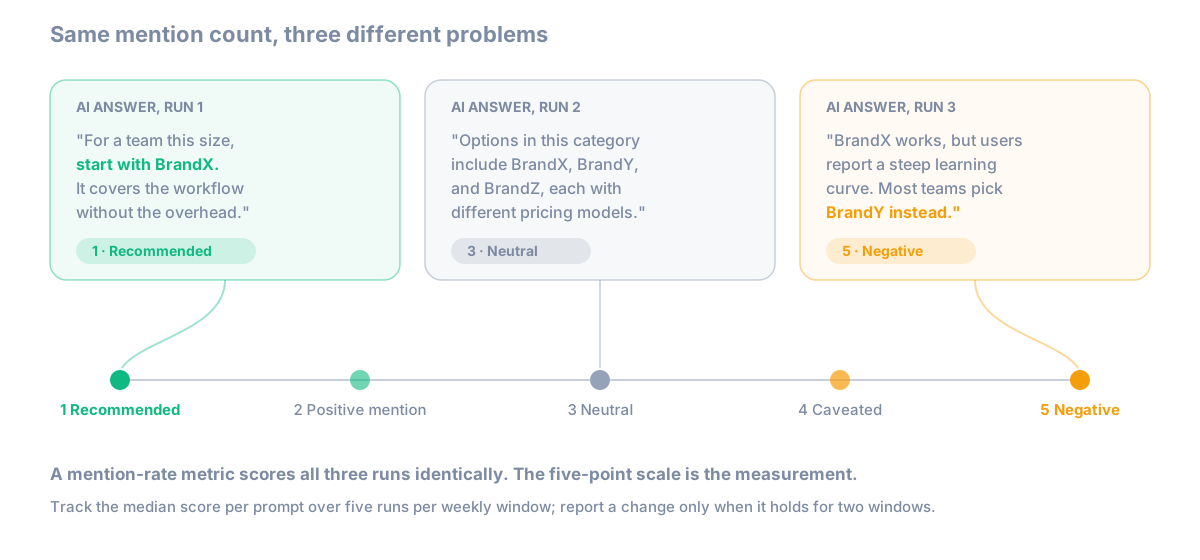
Free-text sentiment notes rot instantly, and a plain positive/negative split forces judgment calls that two reviewers resolve differently. Five points is the practical floor:
- Recommended: the answer steers the buyer toward you ("the best fit for...", "start with...").
- Positive mention: favorable framing without the recommendation.
- Neutral: named without evaluative language, list membership, factual description.
- Caveated: positive surface with a wart attached ("solid, but the learning curve is steep"). Score the caveat, not the compliment, because the caveat is what the buyer remembers.
- Negative: the answer discourages, misstates, or recommends against.
Write the edge-case rules down next to the scale. "Recommended for a niche you do not serve" is a 3, not a 1. An accurate criticism is still a 5, and flagging accuracy separately keeps the fix conversation honest. Written rules are what keep two reviewers landing on the same number.
Cadence, sample size, and drift
Sentiment inherits every variance problem mention tracking has, and adds one: it moves on fewer words. The same prompt can return a 2 and a 4 on the same engine in the same hour, because framing rides on which sources the run happened to pull, a mechanism unpacked in why AI answers change. In our August 2026 study, repeated ChatGPT runs of the same prompt routinely returned different cited sources, and framing follows sources.
So the rules are the usual ones, applied more strictly: five runs per prompt per window, weekly windows, and trend the median score per prompt rather than the mean, so a single outlier run cannot drag the line. Report movement only when the median shifts and holds for two windows. Sentiment is noisier than mention rate; the discipline is what makes it reportable.
Where the sampling comes from
This method adds one column to a protocol you may already be running. The prompt sets, run counts, clean-account rules, and logging format are the standard brand mention tracking protocol; sentiment tracking is that spreadsheet with the five-point score attached to every run, on both category prompts and the branded prompts a skeptical buyer types. If you already log mentions, you are one column away.
Tools that score sentiment
Most tools in the visibility category report presence and citations; fewer score framing, so check for the word "sentiment" in the feature list rather than assuming it. Citlyze records sentiment alongside mention, position, and citations on every tracked answer, with each score linked back to the answer text that produced it, and rolls those readings up into a Net Sentiment Score per measurement window with an attribute matrix against your competitors, shown on the AI brand perception page. That is our own product speaking, so test the claim on the trial. Whatever tool you use, hold it to the reviewer standard above: if you cannot see the answer text behind a sentiment score, you cannot audit the score.
When the score goes negative
Tracking finds the problem; fixing it is source work, and it has its own playbook. The short version is that AI negativity usually lives in specific third-party pages the engines keep citing, and the cited-source column in your log points straight at them. The full remediation sequence, from correcting stale reviews to building the counterweight for model memory, is in how to fix negative brand sentiment in AI answers. Keep the two jobs separate in your reporting: the tracking line tells you whether the fixes worked, which is exactly why it must not be run by wishful thinking.
Add the column this week
If you track mentions already, add the five-point score and the edge-case rules to the existing sheet and backfill nothing; the trend starts now. If you track nothing yet, start with the mention protocol and score sentiment from run one. Either way, in three weeks you will have the number that presence metrics cannot give you: not whether AI talks about you, but whether you would want it repeated to a buyer. Citlyze records it on every tracked answer when you want the reading to happen on a schedule.