How to See and Track Brand Mentions in ChatGPT
How to check whether ChatGPT mentions your brand, and how to monitor it continuously instead of trusting one lucky answer. Protocol, scoring, tools.
 ChatGPT
 Claude
 Perplexity
 Grok
GrokOn this page
To see whether ChatGPT mentions your brand, open a fresh session, ask a question your buyers actually ask, and read the answer. That takes thirty seconds and it is genuinely worth doing right now. The catch arrives on the second check: ask the identical question again and there is a fair chance the brand list changes. Seeing a mention once and tracking mentions are different activities, and this guide covers both.
The thirty-second check, done properly
Three rules make even a casual check meaningful. Use a clean session, because earlier turns steer later answers. Use a neutral account, or a logged-out window, because ChatGPT's memory and custom instructions personalize results toward what it knows about you; checking from your own work account, where you have discussed your product for months, produces the most flattering and least honest read available. And ask buyer questions, not vanity questions: "best invoicing tool for freelance designers" tells you something, "tell me about my company" only tests whether the model has heard of you.
Do this for five of your most commercial questions and you will know within minutes whether ChatGPT is sending buyers your way or your competitor's.
Why one check lies to you
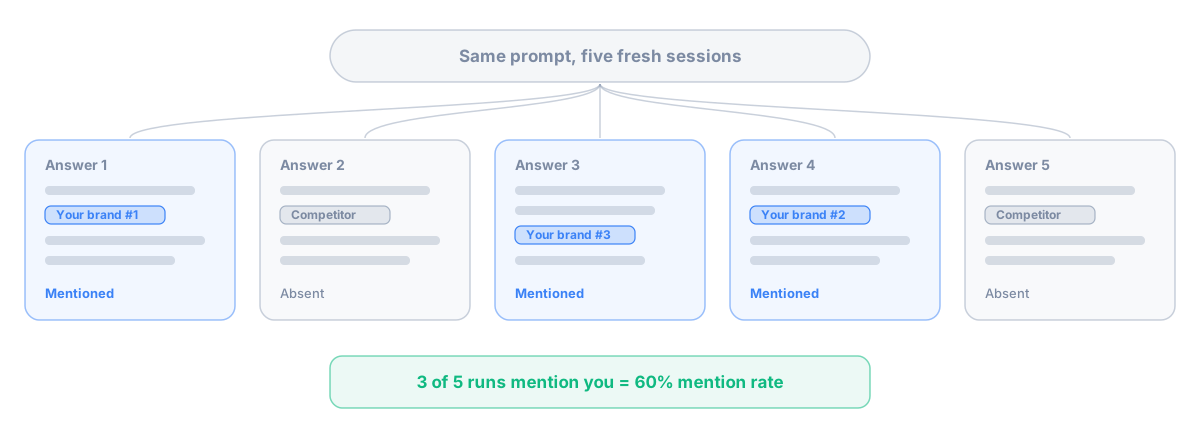
Generation is probabilistic, and ChatGPT also decides per question whether to answer from model memory or to run a live web search with citations. The two modes favor different brands, and which sources the search mode reaches for is its own subject. The practical consequence: your brand can be "in ChatGPT" at a 60% rate, which means four buyers out of ten hear a shortlist without you, and a single check will randomly show you either story. We measured this variance across engines in why AI answers change.
So monitoring means repeated runs. Real-time mention alerts, in the literal sense of watching every ChatGPT conversation worldwide, do not exist and cannot; nobody sees other users' chats. What "monitoring" actually means is high-frequency sampling: your prompts, re-run on a schedule, with rate changes surfaced as alerts.
The weekly protocol
- Take your prompt set (start with 10 to 25; the prompt research guide helps you build it).
- Run each prompt three to five times in fresh sessions, once or twice a week.
- Log per run: mentioned, position (lead recommendation, listed, afterthought), sentiment, competitors named, and whether the answer cited sources, including yours.
- Watch the trend, not the runs. A move from 40% to 70% across two weeks of proper samples is signal. One great answer on Tuesday is not.
Fold ChatGPT's numbers into your cross-engine picture rather than treating it alone; the umbrella method for every surface is in how to track brand mentions in AI search.
Tools that watch it for you
The manual protocol costs a few hours weekly for one engine. Software runs it continuously: Citlyze samples your prompts on schedule, detects mentions and scores their sentiment, tracks competitors on the same runs, and pings Slack or Teams when your ChatGPT rate moves, from $29/month with a 14-day trial; the ChatGPT visibility tracker page shows exactly what the views look like. Budget alternatives such as Otterly.AI and Rankscale also cover ChatGPT with lighter sampling; the full field, graded on methodology, is in our AI visibility tools roundup.
Whatever you pick, apply one test: does it show the run count behind every mention rate? Tools that hide sampling depth are selling you the Tuesday answer.
When ChatGPT gets you wrong
Mention tracking regularly surfaces a nastier problem than absence: ChatGPT describing your brand inaccurately or recommending against it based on stale information. The fix is source-level, not prompt-level. Identify what the answers cite, correct or refresh those pages, strengthen third-party coverage, and re-measure until the narrative moves. Sentiment tracking per prompt, not just mention counting, is what catches this early.
Run the check today
Five buyer questions, one clean session, thirty seconds each. If you show up in fewer answers than your competitors do, start the weekly protocol or point a trial workspace at your prompt set; either way, by next week you will have a mention rate instead of a feeling.